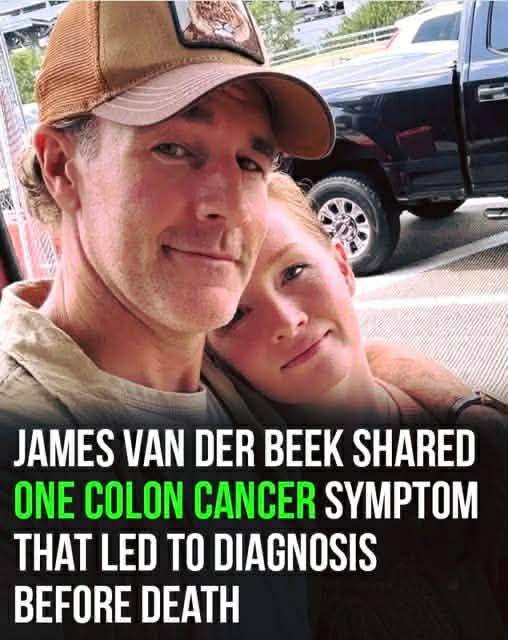
Van Der Beek was battling colon cancer for nearly three years, and his passing brought the question of why so many young people are getting diagnosed with this form of cancer back into the limelight.
The Mirror reported Dr. Will Bulsiewicz, a gastroenterologist who goes by the Gut Health MD online, said the actor’s death “didn’t need to happen.”
In a post on the social media in which he shared his tributes to the late actor, Dr. Bulsiewicz aslo wrote, “He was 48, and this didn’t need to happen.
“James Van Der Beek died from colorectal cancer, and right now, colon cancer is rising in younger adults.”
He further wrote, “But you need to know: this is often preventable. That’s why we lowered the screening age from 50 to 45. If you’re 45 or older, you don’t wait for symptoms; you get screened. And if you have a family history, you start even earlier.
“But at any age, if you have bleeding, a change in bowel habits, unexplained anaemia, persistent abdominal pain, or unexplained weight loss – don’t ignore it. Get checked. As a gastroenterologist, I’ve removed pre-cancerous polyps that would have become cancer.
“That’s what a colonoscopy can do. It can prevent cancer or catch it early when it’s most curable. So I’m asking you, please book the colonoscopy. The earlier the better. Do it for yourself, do it for your family, and help me share this message.”
Van Der Beek’s passing was confirmed by his family, who said in a statement, “Our beloved James David Van Der Beek passed peacefully this morning. He met his final days with courage, faith, and grace.
“There is much to share regarding his wishes, love for humanity, and the sacredness of time. Those days will come. For now we ask for peaceful privacy as we grieve our loving husband, father, son, brother, and friend.”
Van Der Beek was diagnosed with colon cancer in 2023 and was candid about his battle with the disease.
Speaking to People magazine in 2024, Van Der Beek spoke of disclosing his diagnosis with the public, saying he was in “a good place and feeling strong.”
At the beginning, he had been dealing with the disease privately, but had “found it helpful and cathartic to share things publicly,” he told the publication. He added that he wanted to raise awareness about colon cancer.
“I’d always associated cancer with age and with unhealthy, sedentary lifestyles,” Van Der Beek told People. “But I was in amazing cardiovascular shape. I tried to eat healthy — or as far as I knew it at the time.”

He shared that one of the first symptoms he noticed, which is also the case with many other people who suffer from the same disease, were changes to his bowel movement. He brushed that symptom off at the beginning because he thought it was due to his coffee drinking habit, but even after he stopped having coffee, the irregularities in his bowel movement continued.
“When I cut that out and it didn’t improve, I thought, ‘All right, I better get this checked out,’” he said.
He was diagnosed with colon cancer following colonoscopy.
“Then the gastroenterologist said — in his most pleasant bedside manner — that it was cancer,” he said. “I think I went into shock.”
The actor added, “The trickiest thing is there are so many unknowns with cancer.
“You think, ‘How do I fix this? Is this healing me? Is this hurting me? Is this working? Is it coming back?’ As someone who likes answers, not knowing is one of the hardest things.”
In recent years, more people under the age of 50 have been diagnosed with bowel cancer, a rise that researchers believe may be linked to changes in lifestyle, environmental factors, or even genetics.
This type of cancer was once seen mostly in older adults, but as cases among younger people continue to grow, experts are rethinking when screenings should begin and how treatment should be approached.
As per the American Cancer Society, colorectal cancer starts in the colon. “Most colorectal cancers start as a growth on the inner lining of the colon or rectum. These growths are called polyps.”
While polyps are quite common and often noncancerous, some can turn into cancer over time.
Dr. Jeremy Kortmansky of Yale School of Medicine explains that colorectal cancer typically exhibits aggressive histological features, which is why it is often diagnosed in later stages.
The symptoms can be rectal bleeding, changes in bowel habits, diarrhea, or constipation. It is very likely these symptoms to be mistaken for less severe issues like hemorrhoids or irritable bowel syndrome.
Rebecca Siegel from the American Cancer Society believes that the increase of early-onset colorectal cancer at young people can be related to the lifestyle changes introduced in the mid-20th century.
The Western diet has indeed changed dramatically over the years and it now includes more processed foods and sugars, particularly high-fructose corn syrup, that began to be a widely used product in the 70s. Researchers attribute this change to obesity and metabolic diseases, both risk factors for colorectal cancer.
A sedentary lifestyle is another risk factor
Research indicates that it could be years before such changes produce cancer, which accounts for the incident increase in this type of cancer in young people.
Genetics, too, play a significant role, just like with any form of cancer out there.
Obesity increases cancer risk by altering hormones like insulin, promoting cell growth. Chronic inflammation caused by fat tissue also contributes to this risk. A study in JAMA Oncology found that obesity nearly doubles the risk of early-onset colorectal cancer.
John Marshall of Georgetown University’s Lombardi Comprehensive Cancer Center, who has treated cancer patients for more than three decades, said, “We’re now starting to see more and more people in the 20-, 30- and 40-year-old range developing colon cancer. At the beginning of my career, nobody that age had colorectal cancer,” adding that the shift “is shaking us all, to be blunt.”
Please SHARE this article with your family and friends on Facebook.
Bored Daddy
Love and Peace