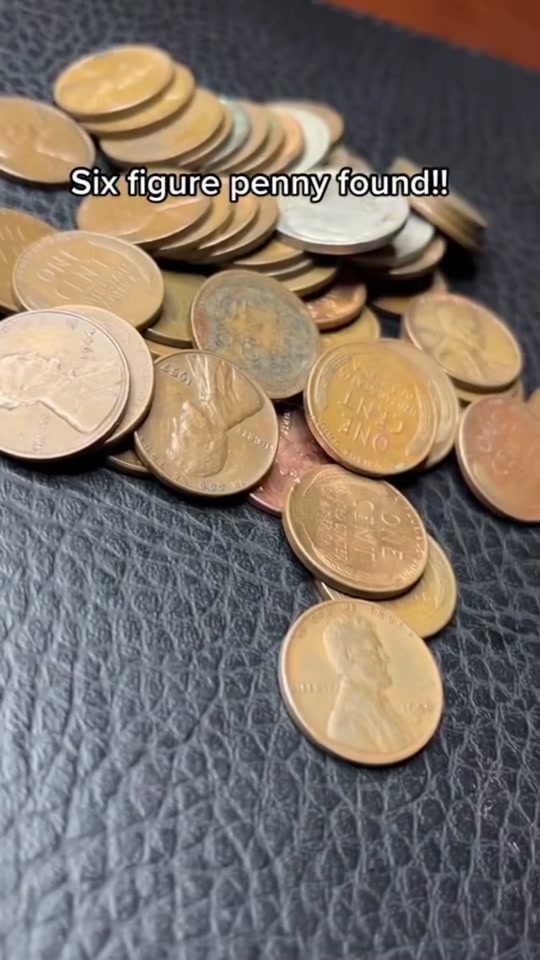
Did one of my followers really just find a penny worth over $100,000?
Yes—and the photos and values are going to shock you.
In this article, I’m going to show you exactly what they found, what similar pennies have sold for, and I’m going to tell you how to spot a fake too.
Before you dismiss this as impossible, keep reading—because collectors are paying six figures for the real thing.
 Why 1943 Pennies Are So Important
In 1943, the U.S. Mint made a major change:
 All pennies were supposed to be made of steel
 They were coated with zinc to save copper for World War II
 No copper pennies were intended to be produced
However, a tiny number of copper planchets from 1942 were accidentally left in the presses.
Those mistakes created one of the rarest and most valuable U.S. coins ever.
 The Penny My Follower Found (Obverse & Reverse)
This is the front (obverse) of the penny my follower discovered.
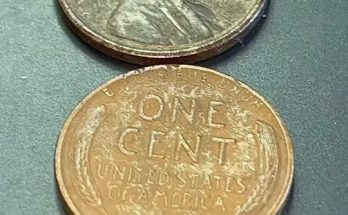
This is the reverse, showing the wheat ears.
At first glance, it looks like a normal Lincoln Wheat Penny—but it absolutely is not.
 Real Auction Results That Prove the Value
These are verified sales, not guesses:
 One 1943 copper penny sold for $240,000
 Another example sold for $336,000
These prices were paid by real collectors, through major auction houses.
 How to Tell If Your 1943 Penny Is REAL (or Fake)
If you think you might have one of these, do not clean it.
Instead, perform these three critical tests.
 Test #1: Weight Test
A genuine 1943 copper penny should:
- Weigh over 3 grams
- Steel pennies weigh less (about 2.7g)
Use a digital scale with 0.01g accuracy.
Test #2: Magnet Test 
This test is fast and extremely important:
- Steel pennies stick to a magnet
- Real copper pennies do NOT stick
The penny my follower found does not stick to a magnet.
Test #3: The “1948 Fake” Date Test 
This is the trick most people don’t know.
There are tons of fake 1943 pennies made from:
 1948 pennies
- The “8” is ground down to look like a “3”
Here’s how to spot it:
- Look at the bottom of the “3”
 On a real 1943, the bottom of the “3” sits lower than the “4”
- If the bottom of the “3” is the same length as the “4”, it’s actually an altered “8”
This single detail eliminates most counterfeits instantly.
 Proof That Buyers Are Waiting
Here’s something most people never show.
When my follower’s penny appeared at auction:
 Over 4,000 page views
 34 active bidders
- All willing to pay serious money
So yes—the buyers are absolutely out there.
 Important Warning: Do NOT Clean the Coin
Cleaning will:
- Destroy original surfaces
- Kill collector value
- Make the coin ungradable
A cleaned coin can lose hundreds of thousands of dollars instantly.
 Final Thoughts
A single penny.
Three simple tests.
Life-changing value.
Check your wheat pennies carefully—because history proves that ordinary people really do find extraordinary coins.