On January 18, 2026, an eagerly anticipated NBA regular‑season game took place in London’s O2 Arena, marking the league’s return to the British capital for the first time since 2019. The matchup between the Memphis Grizzlies and the Orlando Magic drew fans from across the United Kingdom and Europe, showcasing the NBA’s expanding global footprint and providing a vivid example of how international sports events can become unexpected stages for broader social and political expression. The energy around the arena was electric long before tip‑off. Basketball…
On January 18, 2026, an eagerly anticipated NBA regular‑season game took place in London’s O2 Arena, marking the league’s return to the British capital for the first time since 2019.
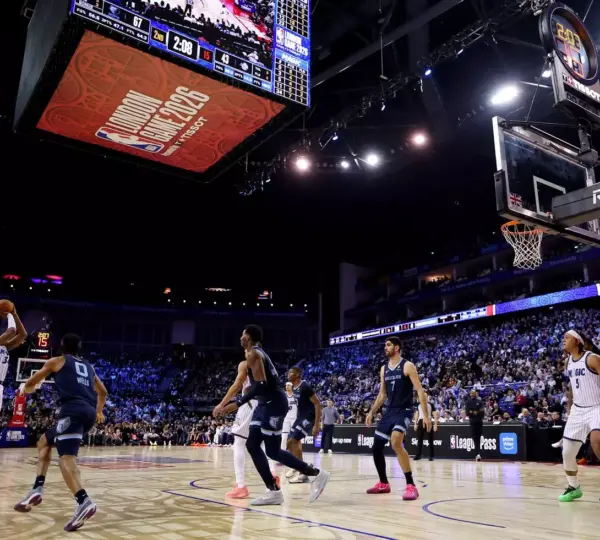
The matchup between the Memphis Grizzlies and the Orlando Magic drew fans from across the United Kingdom and Europe, showcasing the NBA’s expanding global footprint and providing a vivid example of how international sports events can become unexpected stages for broader social and political expression.
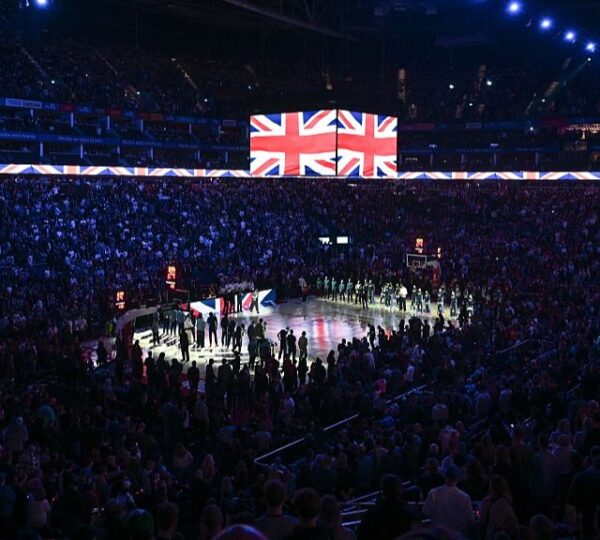
The energy around the arena was electric long before tip‑off. Basketball supporters, many of whom had traveled from other parts of Europe.
Filled the seating bowl to capacity — an estimated 18,424 spectators — soaking up the festive atmosphere unique to international NBA games. Fans wearing team jerseys, waving banners, and buzzing about star players reflected not only the appeal of the NBA abroad but also how these events serve as cultural bridges between nations.
Pre‑Game Ceremony: Vanessa Williams and the Unexpected Interruption
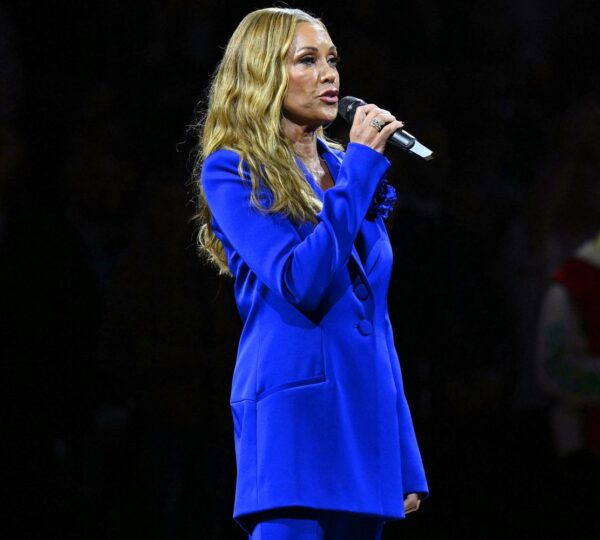
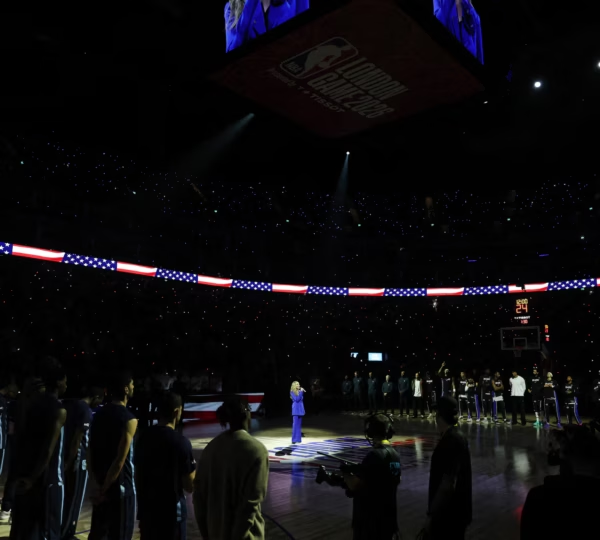
As is customary before NBA games, especially on international soil, the United States national anthem — The Star‑Spangled Banner — was performed live.
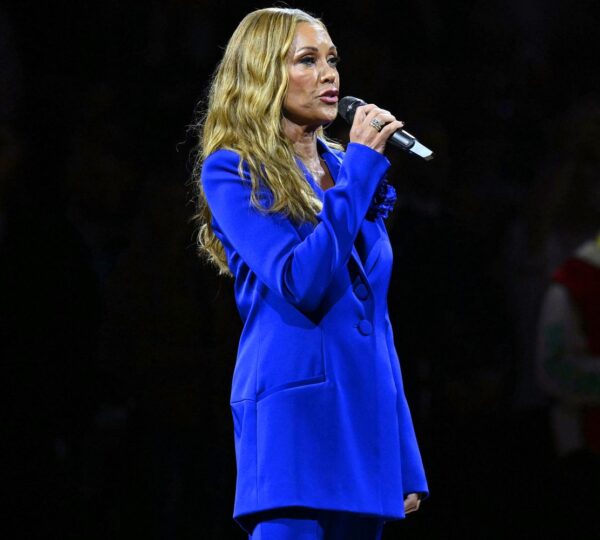
For this occasion, the honor fell to Vanessa Williams, an acclaimed American singer and actress known for her work in music, film, and Broadway, including her starring role in The Devil Wears Prada on London’s West End.
Williams began her rendition of the anthem amid respectful quiet and attention from the crowd. The arena lights dimmed slightly, and the ceremonial tone underscored the event’s international significance.
But midway through the performance, a single spectator’s voice rang out with an unexpected shout:
“Leave Greenland alone!”
The phrase, brief and direct, was a protest aimed not at the anthem itself but at a highly controversial geopolitical issue that had captured global attention: the reported interest by U.S. President Donald Trump in increasing American control over Greenland, a large, semi‑autonomous territory that is part of the Kingdom of Denmark.
Audience Reaction: Mixed, Vibrant, and Reflective of Broader Sentiments
The reaction from the crowd was immediate and mixed, quickly becoming a defining moment of the pre‑game spectacle. Some spectators cheered and applauded the shout, while others issued boos or jeers.
Video circulating on social media shows scattered applause and energetic responses as Williams maintained her composure and completed the anthem.
The interruption did not drown out the performance but rather underscored how international audiences sometimes interpret national symbols differently from domestic crowds.
For many British and European fans, the shout reflected opposition to recent U.S. foreign policy rhetoric rather than a direct critique of the anthem itself. Yet the moment resonated widely on global social media, generating thousands of shares and reactions across platforms like X (formerly Twitter), Instagram, and TikTok.
Importantly, there is no indication from reporting that the interruption led to any physical altercation or formal disruption of the event’s schedule.
Vanessa Williams continued and completed the anthem professionally, and the evening’s program proceeded on time with tip‑off shortly thereafter.
Context: Why “Leave Greenland Alone!”
To fully understand why the words “Leave Greenland alone!” resonated with an international audience, it helps to review the geopolitical background that shaped the moment.
Greenland is the world’s largest island and a semi‑autonomous territory of Denmark, with significant strategic and resource value, particularly as climate change opens Arctic shipping routes and exposes mineral and energy deposits.
In late 2025 and early 2026, President Donald Trump publicly suggested that the United States may aim to acquire Greenland or otherwise assert greater control over its governance for national security reasons. This idea surfaced in speeches, social media, and public commentary, triggering diplomatic pushback from both Denmark and other NATO allies.
European political leaders responded firmly, emphasizing that Greenland’s sovereignty belonged to Denmark and that there would be no negotiations to cede control to the United States.
The controversy also included discussions of tariffs and other economic leverage, as Trump intimated potential trade penalties on countries resisting U.S. overtures regarding Greenland.
This backdrop — international diplomatic tensions involving a major U.S. ally and longtime NATO partner — helped explain why some fans at the London NBA game responded with amusement and applause to the interruption.
The shout was interpreted by many as a lighthearted yet pointed protest against perceived American overreach, rather than simply a random outburst.
Shifting Focus to Basketball: Grizzlies vs. Magic
Once the anthem concluded and the pre‑game ceremony concluded, the attention of players and fans alike shifted fully to the hardwood. The matchup between the Memphis Grizzlies and the Orlando Magic provided plenty of athletic drama and high‑level play.
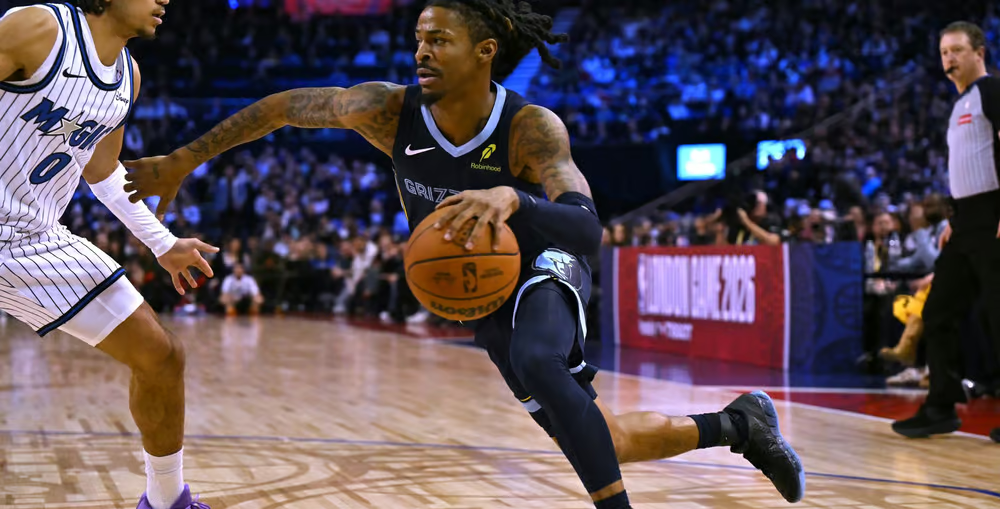
The Grizzlies, led by star guard Ja Morant, who was making a return from injury, ultimately secured a 126‑109 victory over the Magic.
Morant finished with 24 points and 13 assists, energizing his team and showcasing his dynamic playmaking. Bench contributor Jock Landale also made a significant impact with 21 points, adding depth to Memphis’ scoring attack.
For Orlando, Wendell Carter Jr. led the team with 18 points, while key rotation players helped keep the Magic competitive through all four quarters.
Despite falling behind early, Orlando made periodic pushes in the second and third quarters, thrilling fans with athletic hustle and offensive creativity.
From a European perspective, the contest offered many fans an opportunity to see elite-level NBA talent live — something that was increasingly rare before the league expanded its international schedule in recent years.
Significance of the London Game and NBA’s Global Strategy
The O2 Arena matchup wasn’t an isolated spectacle. It was part of the NBA’s broader effort to expand its global footprint, bringing regular‑season games to cities outside North America.
The league has staged international games before in places like Tokyo, Mexico City, and Paris, and London’s inclusion reflects a growing European fanbase eager for top‑tier basketball experiences.
According to league announcements, the NBA plans to continue hosting games in major European cities, with Manchester, Paris, and Berlin already slated for future international showcase matchups.
There’s also ongoing discussion about the possibility of launching a European NBA league as early as the 2027‑28 season — a development that would further deepen the NBA’s roots overseas and fuel transatlantic fandom.
For many fans in the United Kingdom, the return of the NBA regular‑season game was a celebratory moment: a chance to see world‑class athletes, interact with the sport’s culture firsthand, and bring together communities that have long supported basketball even without a local franchise.
Public and Media Reaction
In the hours and days following the game, the anthem interruption dominated news coverage and social media debate, reaching audiences well beyond typical sports reporting.
Major outlets like Reuters, The Independent, and People magazine covered the incident, highlighting both the shout itself and the broader diplomatic tensions it referenced.
International commentators varied in their interpretations:
Some praised the crowd’s reaction as a sign of spirited engagement with political debate, even in a sports context.
Others noted that sports arenas are traditionally places where pre‑game ceremonies — including national anthems — are treated with respect, cautioning that political interruptions risk detracting from the athletic experience.
Some observers emphasized the broader global political context, pointing out that fans overseas may feel more inclined to vocalize disagreement with American foreign policy than domestic audiences.
Despite these discussions, there is no indication of any formal league condemnation or official sanction related to the interruption; the NBA did not announce any disciplinary action, and the game continued as scheduled.
Sports, Politics, and the Global Stage
The London NBA game illustrated how sports and politics can intersect, especially in a world where global issues are discussed in real time on the same platforms used to broadcast major athletic events.
While most fans were there for the basketball, the anthem incident became a prominent talking point precisely because it connected to larger conversations about geopolitics, sovereignty, and international sentiment toward U.S. policy — demonstrating how public spaces like sports arenas can sometimes mirror wider cultural debates.
Yet, for the majority of attendees and viewers, the evening culminated with the thrilling action on the court, high‑scoring play, and memorable performances from elite NBA talent.
The Grizzlies’ victory and energetic crowd response reinforced why the league invests in international events: basketball remains a powerful, unifying form of entertainment capable of drawing diverse audiences together, even amid broader world events.
Conclusion
The NBA game in London was a landmark event that combined sport, culture, and political expression into a single evening of global interest. Fans were treated to a high‑energy matchup that reflected the skill and competitiveness of top NBA teams.
Meanwhile, the anthem interruption became a vivid reminder that international sports arenas are not only places of athletic display but also forums where social and political narratives unfold in real time.
Ultimately, the event highlighted:
The NBA’s expanding global engagement and strategic growth in Europe.
The complexity of audience reactions when politics and sport intersect.
The enduring appeal of basketball as both a competitive spectacle and a cultural touchpoint across borders.
Whether attendees came for the game, the atmosphere, or a moment of international connection, the January 18 matchup at the O2 Arena underscored how sport continues to bridge communities — even when unexpected voices emerge to add their own commentary to the world stage.