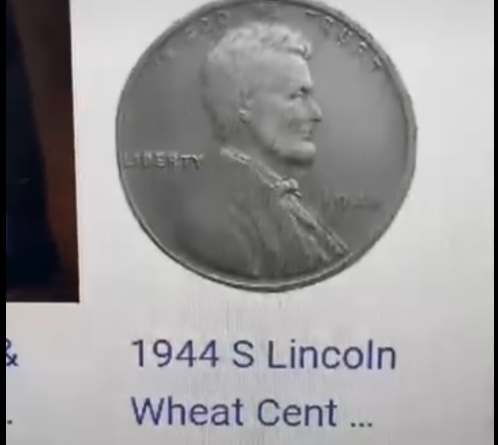
 Could Your 1944 Steel Penny Be Worth Over $100,000?
During a live stream, a viewer asked me:
“I found a 1944 steel penny — is it worth anything?”
The answer: YES! If it’s authentic, your coin could buy you a brand-new car — or even a small house! 

But here’s the truth  most “1944 steel pennies” online are fakes that sell for less than $20. Let’s break down how to tell the real deal from the replicas before you buy or sell.
 Why the 1944 Steel Penny Is So Rare
 Meant for 1943 Only: During World War II, the U.S. Mint made pennies out of steel coated with zinc to conserve copper for ammunition.
 The 1944 Error: When production switched back to copper in 1944, a few leftover steel planchets were accidentally used. These rare mint errors became some of the most valuable Lincoln cents ever struck.
 Estimated Surviving Population: Only 30 to 35 authentic 1944 steel pennies are believed to exist today — making them true legends in the coin world.
 How to Test a 1944 Steel Penny (Step-by-Step)
Don’t risk falling for a fake — here’s a quick guide to check if your coin could be real:
 The Magnet Test
A real steel penny will stick to a magnet because of its iron content.
- Sticks? Possible genuine steel coin.
 Doesn’t stick? It’s not real (probably a copper coin or plated fake).
 Weight Check
Authentic 1944 steel pennies weigh about 2.7 grams.
- Use a digital coin scale for accuracy.
- Normal copper 1944 pennies weigh around 3.11 grams — that’s your red flag!
 Check the Date
Make sure the date clearly reads 1944.
 Many fakes are altered 1943 steel pennies where the “3” is crudely changed to a “4.”
Look closely under magnification — real mint digits have sharp, even edges, not tooling marks.
 Real 1944 Steel Penny Auction Prices
Collectors have paid astonishing prices for verified examples:
| Condition |
Auction Value (Recent Sales) |
|---|---|
| Fine to XF (Circulated) | $30,000 – $50,000 |
| Mint State Certified (PCGS/NGC) | $90,000 – $108,000+ |
| Top-Graded Specimens (MS66+) | Up to $150,000  |
 Fun Fact: One high-grade example sold for $108,000 at Heritage Auctions — enough to buy a luxury car or pay off a mortgage!
 Counterfeit Alert: Beware of Fakes!
Unfortunately, the 1944 steel penny’s fame has made it a prime target for scammers. Here’s what to watch for:
Plated Fakes: Copper pennies coated with silver or zinc to mimic steel.
Altered Dates: 1943 changed to 1944 using engraving or filling tools.
No Certification: Avoid any listings not graded by PCGS, NGC, or ANACS.
 Rule of Thumb: If it’s not slabbed (professionally graded), treat it as suspicious until proven otherwise.
 Collector’s Tip: Get It Certified
If your coin passes the magnet test, weighs correctly, and shows the right date — congrats!  You may be holding a six-figure rarity.
Next steps:
- Submit your coin to PCGS or NGC for professional grading.
- Avoid cleaning or polishing — it can reduce your coin’s value dramatically.
- Insure your coin before mailing for peace of mind.
 Certification not only confirms authenticity but can also increase your coin’s market value by 25–40%.
 Final Thoughts
The 1944 steel penny remains one of the most mysterious and valuable coins in U.S. history. While 99.9% of 1944 pennies are copper, a genuine steel strike could turn an ordinary pocket find into a $100,000+ treasure.
So grab a magnet, a scale, and a magnifying glass — your next payday could be hiding in your coin jar!